
The Digital Frontier: How to stay Protected
Navigating the Digital Frontier: Understanding Internet Security, Threats, and Protection
In our highly interconnected world, the internet serves as the backbone for communication, commerce, and entertainment. However, this seamless connectivity comes with significant risks. As our reliance on digital platforms grows, so does the sophistication of cyber threats. Understanding the common dangers lurking online and implementing robust security measures is essential for protecting personal, professional, and financial data.
The Evolving Landscape of Cyber Threats
Cybercriminals continuously develop new methods to exploit vulnerabilities in software, networks, and human psychology. Some of the most prevalent threats include:
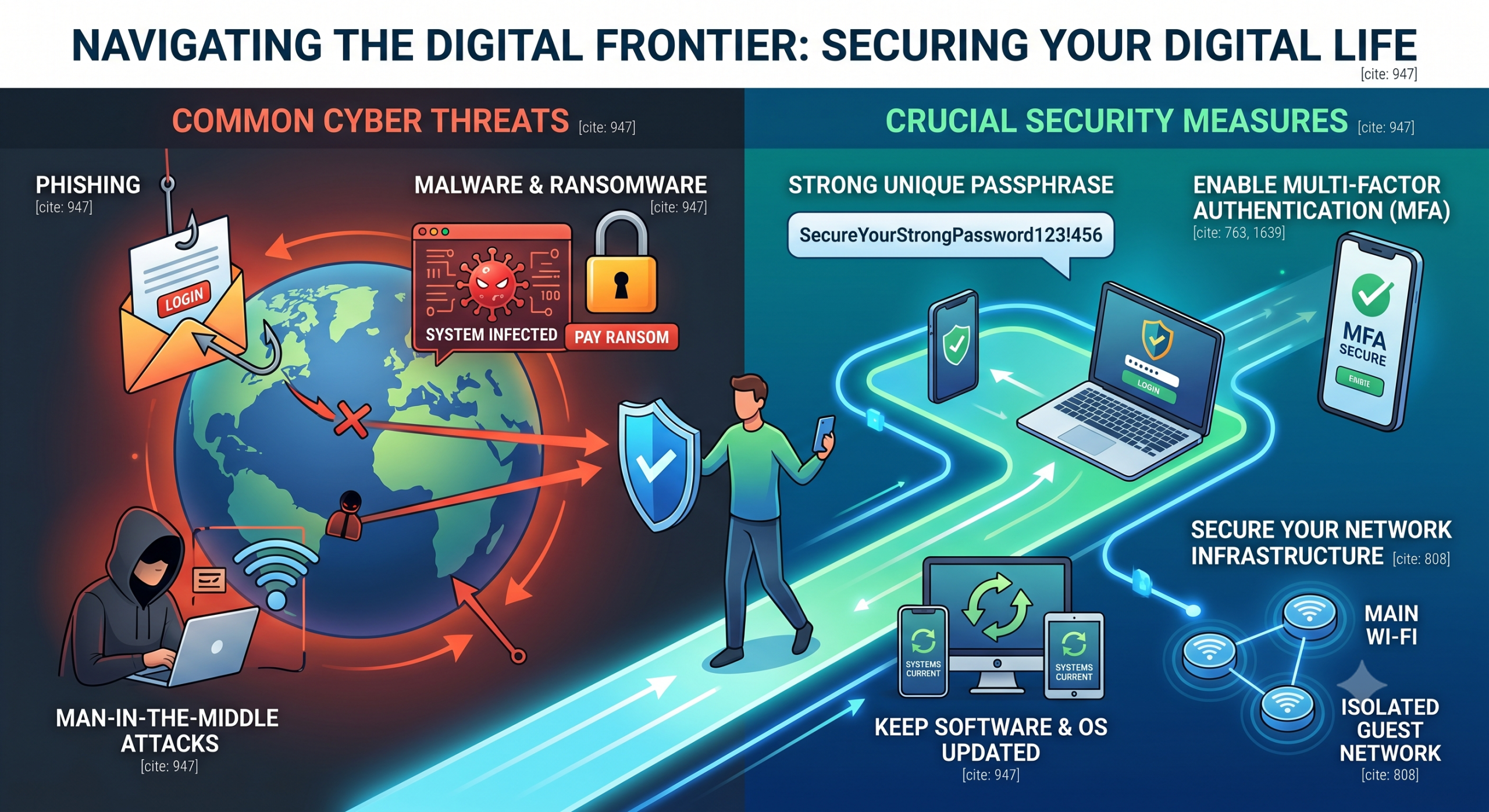
- Phishing: This involves deceptive emails, messages, or websites designed to mimic legitimate organizations (like banks or tech companies). The goal is to trick individuals into revealing sensitive credentials, credit card numbers, or personal information.
- Malware: Short for malicious software, this broad category includes viruses, worms, spyware, and trojans. Malware can quietly infect devices to steal information, track user activity, or disrupt system functionality.
- Ransomware: A particularly destructive form of malware, ransomware encrypts a victim’s files, rendering them inaccessible. The attackers then demand a financial payout (ransom) in exchange for the decryption key.
- Man-in-the-Middle (MitM) Attacks: In these scenarios, cybercriminals intercept communication between two parties—often over unsecured public Wi-Fi networks—allowing them to steal data being transmitted, such as login passwords or financial transactions.
Crucial Security Measures for Digital Protection
While the threat landscape is vast, individuals and organizations can significantly lower their risk profile by adopting foundational security practices.
1. Implement Strong, Unique Passwords and Use a Passphrase
Using the same password across multiple websites creates a domino effect; if one account is breached, all of them are compromised. Passwords should be complex, mixing uppercase letters, lowercase letters, numbers, and symbols. Even better, using a “passphrase”—a long string of random words—makes passwords much harder for automated hacking tools to crack while remaining easier for humans to remember.
2. Enable Multi-Factor Authentication (MFA)
MFA adds an extra layer of defense beyond just a username and password. It requires users to provide two or more verification factors to gain access to an account—such as a temporary code sent to a mobile app or a biometric fingerprint scan. Even if a hacker successfully steals your password via phishing, MFA will generally block them from accessing the account.
3. Keep Software and Operating Systems Updated
Software developers regularly release updates and patches to fix security vulnerabilities. Delaying these updates leaves a door open for cybercriminals to exploit known flaws. Enabling automatic updates for your operating system, web browsers, and apps ensures you always have the latest security defenses.
4. Secure Your Network Infrastructure
A secure home network prevents unauthorized external access to your devices. Always change the default administrative passwords on your home router to something secure. Furthermore, deploying modern network architectures, such as a mesh Wi-Fi system that offers isolated guest networks, allows you to separate vulnerable smart home devices from your primary computers and smartphones, containing potential breaches.
Conclusion
Internet security is not a one-time setup, but an ongoing practice of digital hygiene. By staying vigilant against common tactics like phishing, maintaining updated software, and securing accounts with multi-factor authentication, users can safely enjoy the benefits of the digital world while keeping their private data secure.